
KG Curriculum

Foundation for Life
KG Curriculum (Age: 3 to 5 Years)
Kindergarten education is a foundation for life. It is a nurturing learning process in which children are encouraged to grow as unique individuals, progressing at their own pace within a safe, supportive, and stimulating environment. At this stage, learning is not limited to academic concepts; instead, it focuses on developing the whole child—emotionally, socially, physically, intellectually, and creatively.
In a Kindergarten setting, the educator serves as a guide and facilitator rather than a traditional instructor. Teachers carefully observe each child’s interests, abilities, and learning style, providing appropriate materials and experiences that encourage exploration, discovery, and independent thinking. This approach respects the natural concentration and curiosity of children, allowing their innate creativity to flourish across all areas of learning.
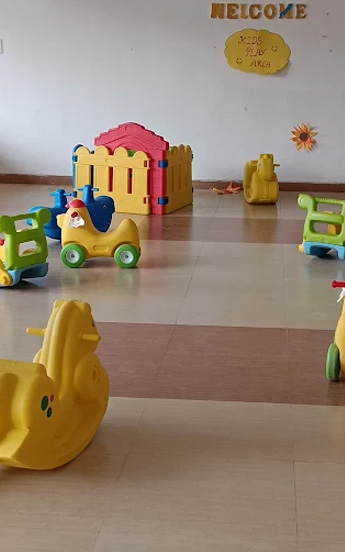
Kindergarten education emphasizes the balance between responsibility and freedom of choice. Children are given opportunities to make decisions, explore materials, and engage in activities that interest them, all within a structured framework that ensures discipline and purposeful learning. The environment is intentionally non-competitive, allowing each child to develop confidence and self-worth without pressure or comparison.

Our Priorities
Objectives of KG Education
KG educators strive to nurture and promote the following qualities in every child:
Self-confidence & Self-esteem
Helping children believe in their abilities and value their uniqueness.
Responsibility
Encouraging awareness of their actions and their impact on others.
Independence & Adaptability
Supporting children in managing tasks and adjusting to new situations.
Cooperation & Community Spirit
Teaching teamwork, sharing, and respect for group harmony.
Respect for Others
Instilling empathy and understanding for the rights and needs of people around them.
Concentration & Perseverance
Guiding children to focus on tasks and complete them with patience.
Innovation & Self-motivation
Fostering curiosity, creativity, and a love for learning.
"Children in this environment are free to move around, interact, communicate, and work with materials that have been thoughtfully introduced to them. This freedom encourages independence, confidence, and active engagement in learning."
Our Subjects
KG Curriculum Taught
The Kindergarten curriculum is thoughtfully designed to provide a balanced and engaging learning experience that supports the intellectual, emotional, social, and creative development of every child.
Subjects & Learning Areas
- Language – Tamil
- English
- Numbers / Mathematics
- Environmental Studies (EVS)
- Storytelling
- Fine Arts
- Montessori Methods
This integrated curriculum ensures that children develop language skills, logical thinking, creativity, observation, and social awareness through age-appropriate activities and experiential learning.

Five Areas
Learning Environment
1. Exercises of Practical Life / Life Skills
Practical Life activities are carefully designed developmental exercises that help children master everyday skills. Examples include simple tasks such as arranging objects, pouring, folding, cleaning, and caring for personal belongings. These exercises serve important developmental purposes by strengthening motor skills, attention span, orderliness, and a sense of responsibility.
2. Sensorial Activities
Sensorial materials are scientifically designed learning tools that help children refine and develop their senses. These activities enable children to observe, compare, and understand physical properties like size, shape, sound, and weight. Sensorial learning prepares the mind for future academic concepts by sharpening observation and discrimination skills.
3. Language Development
Language learning is joyful and interactive. Stories, rhymes, songs, and storytelling sessions form an essential part of daily activities. These experiences expand vocabulary, improve listening skills, and encourage children to express their thoughts confidently while fostering imagination and creativity.
4. Mathematics
Mathematical concepts are introduced gradually, moving from concrete to abstract. Children first learn through hands-on materials that help them visualize numbers and patterns. This strong foundational approach ensures they understand concepts clearly and confidently transition to abstract thinking as they grow.
5. Cultural Studies
Cultural education helps children explore the world around them through Geography, Zoology, Botany, History, and Art. Celebrating festivals is an important part of our multicultural approach, fostering traditions, values, and unity through traditions and significance of different cultures.
6. Tiny Tots Club Activities
Programs designed to help children discover and showcase their talents. These activities build confidence, reduce shyness, and encourage participation, enhancing personality development and communication skills to grow into expressive individuals.
Our Methodology
Our Teaching Approach
In the Kindergarten environment, the educator functions as a guide and facilitator, respecting each child’s concentration level, interests, and unique learning style. This approach allows the child’s natural creativity to emerge across all areas of learning.
KG education emphasizes balancing responsibility with freedom of choice, giving children opportunities to explore, discover, and learn independently within a structured environment. The primary goal is to guide students toward appropriate behavior, self-discipline, and the development of strong character in a joyful, non-competitive atmosphere.
Character
Building Foundation